.png)
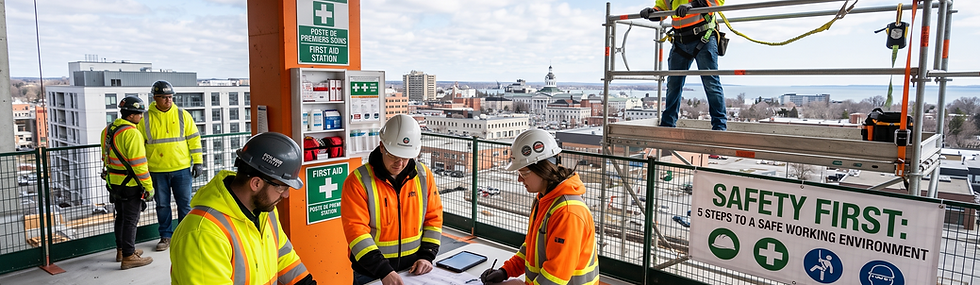
5 Steps to a Safe Working Environment: Mastering First Aid, WHMIS, and Fall Prevention
Every business owner and manager wants their team to thrive in a secure, positive setting. When your staff feels protected on the job, daily productivity naturally goes up, and employee turnover goes down. But navigating all the local occupational health rules, from chemical handling to severe fall prevention, can sometimes feel overwhelming for both brand new and established businesses.
You are likely looking for a straightforward, foolproof way to keep everyone out of harm and strictly compliant with provincial regulations. That is exactly what this comprehensive guide provides. We are going to break down the essential 5 steps to a safe working environment so you can easily implement a permanent culture of protection today.
By following these practical actions, you ensure that every single person on your team arrives home safely at the end of the day. Let us explore how you can make your facility a beacon of health, well-being, and absolute compliance.
Key Takeaways
-
Identify hidden workplace hazards early before they become actual, costly physical problems.
-
Keep up with mandated compliance through certified, hands-on Workplace Hazardous Materials Information System (WHMIS) instruction.
-
Prevent severe site injuries by implementing rigorous Working at Heights training for all elevated tasks.
-
Equip your staff with life-saving First Aid and CPR knowledge to handle unexpected medical emergencies confidently.
-
Foster honest, daily dialogue about workplace conditions, protective gear, and potential on-site risks.
Step 1: Conduct Routine and Thorough Hazard Assessments
The very first action you must take is identifying exactly what could go wrong. You cannot fix a hazard if you do not know it exists in the first place. Walk through your facility and take detailed notes of everything from loose electrical wiring to unlabeled chemical storage.
Businesses in rapidly expanding regions like Brampton are constantly upgrading their physical infrastructure and expanding their floor plans. Regular site checks ensure you catch new risks early in the renovation process. Keep a dedicated logbook and make hazard identification a weekly habit for your entire management team.
What to look for during an assessment:
-
Slippery surfaces or uneven flooring, especially around loading docks.
-
Frayed cords, overloaded outlets, or poorly maintained heavy machinery.
-
Ergonomic issues like poor desk posture or repetitive manufacturing motions that cause long-term strain.
-
Signs of team burnout, as extreme fatigue drastically increases the likelihood of accidental injuries.
Step 2: Master WHMIS Training to Handle Hazardous Materials
Understanding exactly what substances your team works with is a critical part of the 5 steps to a safe working environment. The Workplace Hazardous Materials Information System (WHMIS) is Canada's national standard for hazardous workplace chemicals, and training is absolutely non-negotiable.
For businesses manufacturing goods in Peterborough or operating heavy logistics and transport hubs in Cornwall, proper WHMIS certification is a strict legal necessity. Workers must be actively trained on the hazardous products they interact with daily.
Why comprehensive WHMIS instruction matters:
-
Instant Recognition: Your staff will learn to quickly read safety data sheets and instantly recognize international hazard symbols, from corrosives to flammables.
-
Safe Handling and Storage: Proper education ensures chemicals are stored at the correct temperatures and completely separated from reactive agents.
-
Emergency Spill Response: If an accidental spill occurs, WHMIS-certified employees know exactly which containment protocols to deploy, minimizing environmental impact and respiratory exposure.
Staying aligned with the Occupational Health and Safety Act (OHSA) protects your team from long-term health issues and saves your company from massive financial penalties.
Step 3: Implement Rigorous Working at Heights Training
Falls remain one of the most common causes of serious workplace injuries across the province. If any member of your crew is working at a height of 3 metres or more, specialized fall prevention training is legally required.
Construction, roofing, and structural renovations are booming across Kingston and Etobicoke. If your crew is elevated, handing out a basic safety harness is simply not enough. They need immersive, highly practical instruction to understand the physics of fall arrest systems.
Essential components of elevated safety:
-
Equipment Inspection: Workers must know how to properly inspect lanyards, lifelines, and harnesses for micro-tears before every single shift.
-
Anchor Points: Training teaches staff how to identify and utilize structural anchor points that can safely hold maximum fall arrest weight.
-
Travel Restraint vs. Fall Arrest: Employees will clearly understand the difference between systems designed to prevent them from reaching a structural edge and systems designed to catch them if a fall occurs.
Step 4: Ensure Proper CPR and First Aid Certification
A prepared team is a protected team. Providing thorough First Aid instruction is not just a great idea for boosting daily morale; it is a strict legal requirement in Ontario. When your staff knows exactly how to handle an unexpected medical emergency, panic disappears and immediate, life-saving action takes over.
You need to ensure absolutely everyone is fully up to speed on their required certifications. For the most engaging and hands-on learning experience available, you can always rely on Holmes Safety Training to get your team completely compliant.
Whether your office is located in Ottawa or you run a busy retail storefront, having certified staff on every shift provides incredible peace of mind. Practical, real-world instruction ensures your employees have the ultimate confidence to step up and administer CPR or apply bandages when seconds matter most.
Step 5: Equip Your Team and Communicate Openly
It is completely impossible to maintain the 5 steps to a safe working environment without supplying the proper gear and keeping the lines of communication wide open.
Keeping your operations running smoothly in Brockville means prioritizing high-visibility vests, impact-resistant hard hats, and certified steel-toed footwear. Furthermore, you must provide designated, temperature-controlled storage spaces to maximize the lifespan of this crucial equipment.
Build a transparent safety culture:
-
Hold regular weekly meetings where everyone is actively encouraged to share their observations.
-
Break down language barriers by translating vital safety documents and hazard warning signs into the primary languages spoken by your crew.
-
Establish an anonymous reporting system so team members can share hazards they might feel too shy to mention in a group setting.
When workers feel heard and properly equipped by management, they take active ownership of their own well-being.
Conclusion
Building a secure and thriving workplace does not have to be a complicated puzzle. By actively identifying hidden hazards, mastering WHMIS protocols, implementing strict Working at Heights standards, providing excellent CPR instruction, and communicating openly with your staff, you set your entire team up for absolute success.
Every single worker deserves the right to arrive home safely at the end of the day, and these targeted actions make that core mission a reality. You can make confident decisions today that will protect your business and your people tomorrow.
Ready to take your workplace security to the next level? Book a practical, hands-on training session with Holmes Safety Training to explore your options and keep your crew ready for anything.